Pull-Ups: How to Correctly Complete Your First Pull-Up
A pull-up is one of the most powerful bodyweight exercises you can learn. It looks simple: hold the bar, pull your body up, and lower yourself back down. But for beginners, the first pull-up can feel almost impossible.
The truth is, pull-ups require more than arm strength. They need back strength, grip strength, core control, shoulder stability, and good technique. Many people fail their first pull-up not because they are “too weak,” but because they do not know how to train for it step by step.
If your goal is to complete your first real pull-up, this guide will help you understand what to practice, how to build strength, and what mistakes to avoid.
What Muscles Do Pull-Ups Train?
Pull-ups mainly train the upper body, especially the back and arms. They are also great for building overall body control.
The main muscles involved include:
| Muscle Area | Role in Pull-Ups |
| Back | Helps pull your body upward |
| Biceps | Assists the pulling movement |
| Shoulders | Keeps the upper body stable |
| Forearms | Supports grip strength |
| Core | Helps keep your body controlled |
| Upper chest | Assists with body positioning |
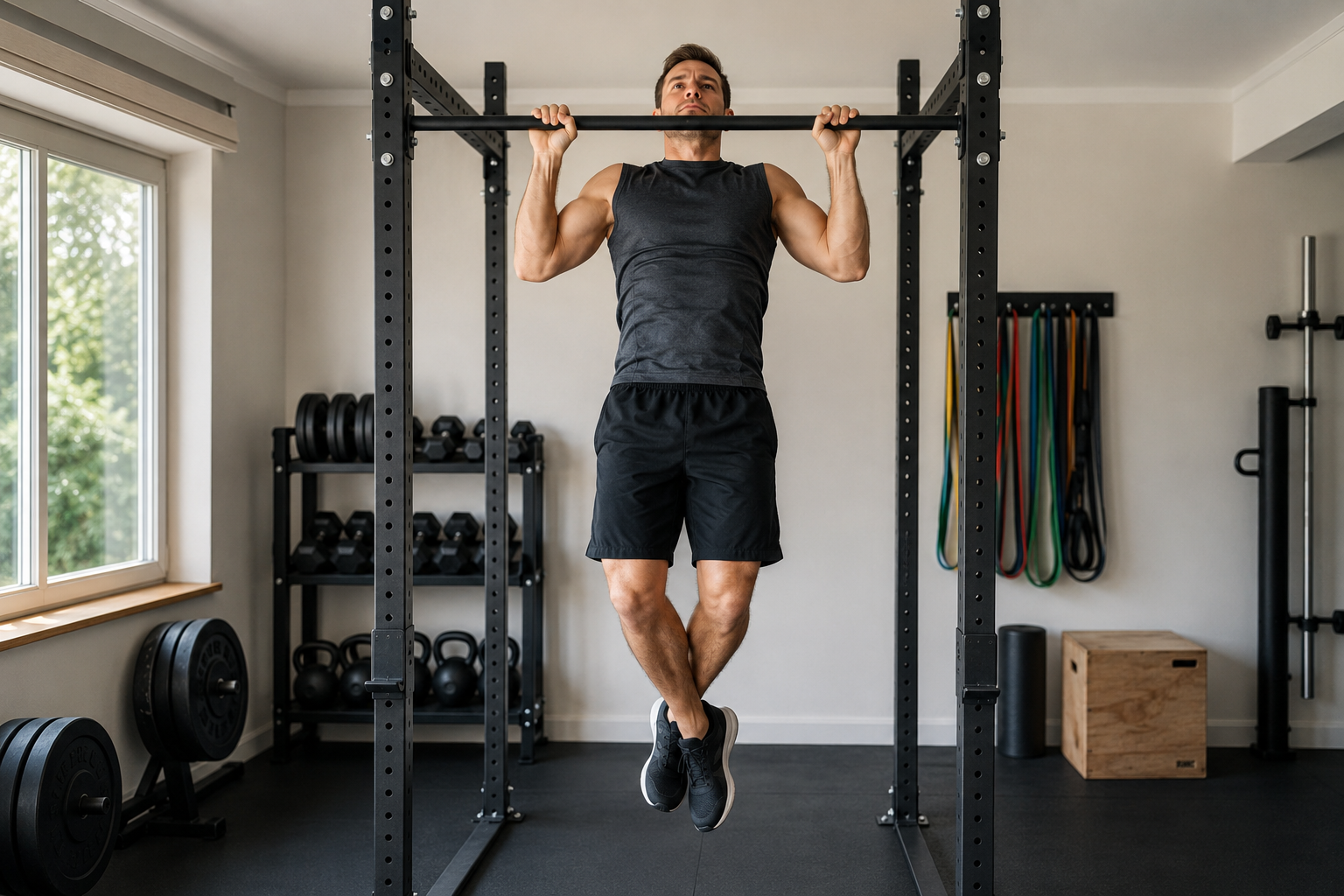
A good pull-up is not just about pulling with your arms. You should feel your back working, your core staying tight, and your body moving as one strong unit.
Why Your First Pull-Up Feels So Hard
Pull-ups are difficult because you are lifting your full body weight. Unlike machines or dumbbells, you cannot easily reduce the load at first unless you use assistance.
Beginners often struggle with three things:
Weak grip strength.
If your hands and forearms get tired too quickly, you cannot stay on the bar long enough to practice.
Not enough back activation.
Many beginners try to pull only with their arms. This makes the movement harder and less efficient.
Lack of body control.
Swinging, loose legs, and a relaxed core can make the pull-up feel unstable and much more difficult.
The solution is not to keep jumping at the bar and hoping it works. You need to train the movement in smaller steps.
Step 1: Learn the Correct Pull-Up Position
Before you pull, you need to know how to hang correctly.
Hold the bar with your palms facing away from you. Your hands should be slightly wider than shoulder-width apart. Let your body hang, but do not completely collapse into your shoulders.
Keep your ribs down, tighten your core slightly, and avoid swinging. Your legs can stay straight or slightly bent, depending on the height of the bar.
This starting position helps you build control and prepares your shoulders for the pulling movement.
Step 2: Build Grip Strength with Dead Hangs
Dead hangs are one of the best beginner exercises for pull-up training. They help strengthen your grip, forearms, shoulders, and confidence on the bar.
Hold the pull-up bar and hang with control. Keep your shoulders active instead of completely relaxed. Breathe steadily and try not to swing.
Start with:
| Level | Hold Time |
| Beginner | 10–15 seconds |
| Improving | 20–30 seconds |
| Stronger | 40–60 seconds |
Do 2–4 sets. If your hands hurt or your grip fails quickly, start with shorter holds and build up gradually.
For this exercise, wear a top that allows your shoulders and arms to move freely. A comfortable sports bra or fitted training top can help you stay secure without restricting your upper-body movement.
Step 3: Practice Scapular Pull-Ups
Scapular pull-ups teach your back and shoulders how to start the pull-up correctly. This is a small movement, but it is very important.
Hang from the bar with straight arms. Without bending your elbows, pull your shoulders down and slightly back. Your body will lift just a little. Then slowly relax back to the starting position.
Think of it as moving your shoulder blades, not your arms.
Start with 6–10 repetitions for 2–3 sets.
This exercise helps you avoid the common mistake of pulling only with your biceps. It teaches your back to join the movement from the very beginning.
Step 4: Use Negative Pull-Ups
Negative pull-ups are one of the most effective ways to build strength for your first full pull-up.
Instead of pulling yourself up, you start at the top position and slowly lower yourself down.
Use a box, bench, or small jump to bring your chin above the bar. Hold the top position for a second, then lower your body slowly until your arms are fully extended.
Try to lower for 3–5 seconds.
Start with:
| Exercise | Beginner Amount |
| Negative Pull-Ups | 3–5 reps |
| Sets | 2–4 sets |
| Rest | 60–90 seconds |
Do not drop quickly. The slower you lower yourself, the more strength you build.
Because negative pull-ups require control, choose activewear that stays in place while your body moves vertically. A secure top and flexible bottoms can help you focus on the movement instead of adjusting your clothes.
Step 5: Try Assisted Pull-Ups
Assisted pull-ups allow you to practice the full movement while reducing some of your body weight.
You can use a resistance band, an assisted pull-up machine, or place one foot lightly on a chair for support.
The goal is not to let the assistance do all the work. Use just enough help to complete the movement with proper form.
A good assisted pull-up should look like this:
| Movement Phase | What to Do |
| Start | Hang with control |
| Pull | Drive elbows down toward your sides |
| Top | Bring chin close to or above the bar |
| Lower | Come down slowly |
| Finish | Return to a controlled hang |
Start with 5–8 repetitions for 2–3 sets.
As you get stronger, use less assistance over time.
Step 6: Strengthen Your Back with Rows
Rows are a great exercise for building the pulling strength needed for pull-ups. If you are not strong enough for pull-ups yet, rows can help you progress safely.
You can do bodyweight rows using a low bar, suspension straps, or a sturdy table setup if it is safe and stable.
Keep your body straight, pull your chest toward the bar, squeeze your shoulder blades, and lower yourself slowly.
Start with 8–12 repetitions for 2–3 sets.
Rows help you learn the feeling of pulling with your back instead of only using your arms.
Step 7: Train Your Core
A strong core makes pull-ups much easier. If your body swings too much or your legs move uncontrollably, you waste energy.
Good beginner core exercises include:
| Exercise | Beginner Amount |
| Plank | 20–30 seconds |
| Dead Bug | 8–10 reps each side |
| Hollow Hold | 10–20 seconds |
| Knee Raises | 8–12 reps |
You do not need to train abs for a long time. Just add 2–3 core exercises after your upper-body workout.
For core training, activewear should feel soft, flexible, and secure around the waist. You should be able to lift your legs, brace your body, and move without the waistband rolling down.
How to Attempt Your First Real Pull-Up
When you feel stronger with hangs, negatives, assisted pull-ups, and rows, it is time to try your first real pull-up.
Start from a controlled hang. Tighten your core. Pull your shoulder blades down first, then drive your elbows down toward your sides. Keep your chest slightly lifted and avoid kicking your legs.
Pull until your chin reaches the bar level or slightly above it. Then lower yourself slowly and with control.
Your first pull-up does not need to be perfect. Even getting halfway up is progress. The key is to keep training consistently.
Common Pull-Up Mistakes to Avoid
Pulling only with your arms.
Your back should do a lot of the work. Think about pulling your elbows down, not just pulling your chin up.
Swinging too much.
A little movement is normal for beginners, but large swings make the exercise harder and less controlled.
Skipping the lowering phase.
The way you come down matters. Lower slowly to build strength and protect your shoulders.
Training pull-ups every day.
Your muscles need time to recover. For most beginners, 2–3 focused pull-up sessions per week is enough.
Using poor shoulder position.
Do not hang with your shoulders painfully shrugged up. Keep your shoulders active and controlled.
Beginner Pull-Up Training Plan
You can follow this simple plan 2–3 times per week.
| Exercise | Amount |
| Dead Hangs | 3 sets of 10–30 seconds |
| Scapular Pull-Ups | 3 sets of 6–10 reps |
| Negative Pull-Ups | 3 sets of 3–5 reps |
| Assisted Pull-Ups | 2–3 sets of 5–8 reps |
| Bodyweight Rows | 3 sets of 8–12 reps |
| Plank | 2 sets of 20–30 seconds |
Rest 60–90 seconds between sets. Focus on clean movement instead of rushing through the workout.
After a few weeks, test your pull-up again. Even if you are not there yet, you should feel stronger, more stable, and more confident on the bar.